 The Silfra Snorkeling
Silfra Snorkeling vs. Diving: Which Is Right for You?
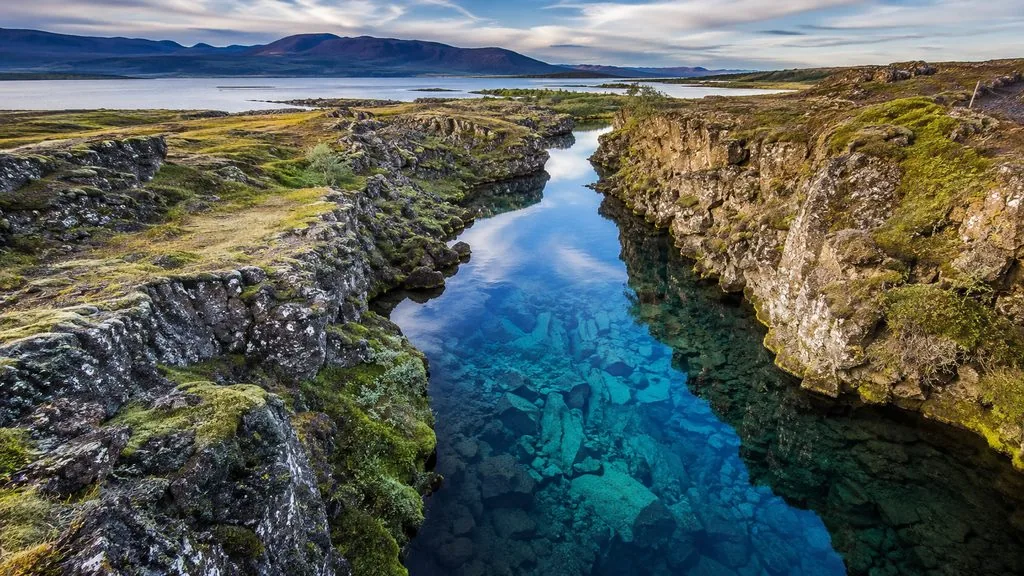
Snorkeling the fissure
You float on the surface in a drysuit, see the rock walls around you, and drift through Big Crack, Silfra Hall, Silfra Cathedral (a 100-metre straight view to the other wall), and Silfra Lagoon. The experience is horizontal; you see the walls from the level of the water. Visibility over 100 metres means you see very far. Most people snorkel (anyone age 12+ who can swim can book). The tours run 3 to 5.5 hours total, with 30 to 40 minutes in the water. Price ranges from $127 (meet-up) to $213 (Reykjavik pickup).
Snorkeling reviews run 4.7 to 4.9 stars from over 6,400 reviews combined. Most comments mention the clarity and the scale. Complaints are mostly about the drysuit discomfort, the cold on the face and hands, and the lack of fish. But people understand that going in.
Diving the fissure
You descend to roughly 18 metres and see the rock walls and the depth below you. The rift looks different from below; you see the fissure as a canyon, not just walls on either side. The visibility is identical, but your perspective changes. Jürgen from Germany said the water felt like you were floating and called it a perfect bucket-list dive. Péter said the same: floating, perfect.
The diving tour is limited to certified divers. You need either drysuit certification or about 10 logged drysuit dives to book. The operator verifies this; you cannot just show up and claim you have dives. The dive costs around $280. Ratings are 4.8 stars from 72 reviews. Fewer people do it, but those who do rate it as highly as snorkeling.
Which is right for you
If you are not a certified diver, snorkel. If you are certified and want a deeper perspective on the rift, dive. Both experiences are remarkable. The difference is whether you want to see it from the surface (snorkel) or the depth (dive). Neither is "better"; they are just different angles on the same geology.
Requirements
Snorkeling: Age 12+, able to swim, good health, medical form (doctor’s note if 60+). Anyone who clears these can book.
Diving: Certified diver OR diver with approximately 10 logged drysuit dives. The operator checks your certification. Maximum dive depth is 18 metres.
If you are already a diver, try the dive. You will see Silfra from a completely different perspective. If you are not diving certified, snorkel. The view from the surface is still extraordinary.
Book the Silfra diving tour (certified divers)
The most direct way to float between two continents is a guided tour — a live guide, all gear included, and the fissure in its full clarity, with free cancellation.
Frequently asked questions
What is the difference between snorkeling and diving at Silfra?
Snorkelers float on the surface; divers descend to 18 metres. Snorkeling is for anyone age 12+ who can swim; diving is for certified divers only or divers with ~10 logged drysuit dives.
Which is better, snorkeling or diving?
Both run 4.7–4.9 stars. Snorkeling gives you a surface view of the walls; diving gives you a depth view of the rift as a canyon. It depends whether you want to see the rift from above or below.
What are the depth limits?
Snorkelers float on the surface (0 m). Divers go to approximately 18 metres maximum. The entire fissure reaches ~60 metres in places, but diving is limited to 18 m for safety.